
Crawl Space Vapor Barrier in Columbia MO - Every Inch of Soil Covered, Water Fixed First
Musty smell, damp dirt or torn plastic under your floors? We find where the water comes from, then cover all the bare ground.
- Licensed and insured.
- Free estimates at your property.
- We reply within 1 business day.
Does my crawl space need a vapor barrier?
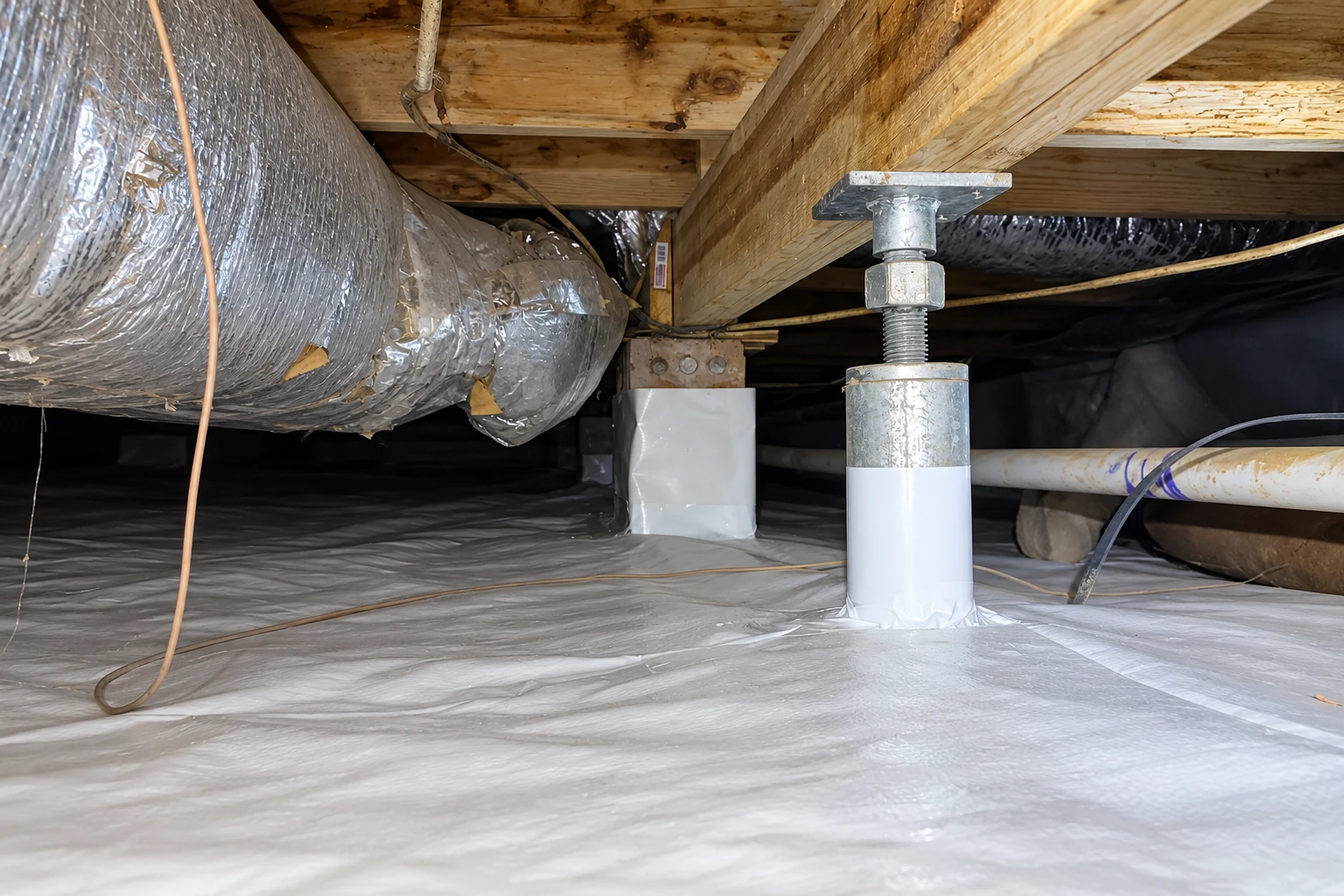
A crawl space vapor barrier in Columbia, MO is a sheet of plastic laid over all the bare soil under your house, so moisture from the ground stays in the dirt instead of rising into the crawl space and your floors. At Heatwise Columbia Insulation Company, we help you decide whether a plain ground cover is enough or a fully sealed crawl space is worth the bigger job.
Most crawl space calls I get start with a smell in the house, floors that feel cold, or a look through the hatch that turned up wet dirt or old plastic that's torn and bunched up. The price moves with the crawl space's size, the plastic's thickness, how low and tight the space is to work in, and whether you want a plain cover or a full seal. The schedule depends on what has to happen first, like fixing water that's getting in and clearing out what's stored down there, and before we book the work we check with the building office for your address on whether a permit is needed and apply for it if one is. If your floors are cold too, we can look at crawl space insulation on the same visit, and your written estimate lays it all out for your house.
How do you know your crawl space needs a cover?
A musty smell indoors
You notice an earthy, musty smell in the rooms over the crawl space, usually worse on humid summer days. That usually means damp soil is putting moisture into the air down there, and that air drifts up into the house, so the longer it goes, the longer the joists and subfloor sit damp.
Wet dirt or puddles
You open the hatch and the soil is dark and soft, or there's water sitting in low spots after a rain. Water is getting in from somewhere, and plastic laid over it only hides the problem, so it's worth finding the source before the wood starts to soften.
Old plastic torn or pulled back
There's a cover down there, but it has gaps, rips where someone crawled to the furnace, or edges that never reached the walls. Every patch of bare soil keeps feeding moisture into the space, and the gaps tend to grow each time someone goes down.
Work that often goes with it
Vapor barrier installation
For moisture that's getting into walls, a basement or other parts of the house, not just the crawl space floor.
Attic air sealing
Closing leaks at the top of the house cuts down on the damp air it draws up from underneath.
How we put in a crawl space vapor barrier
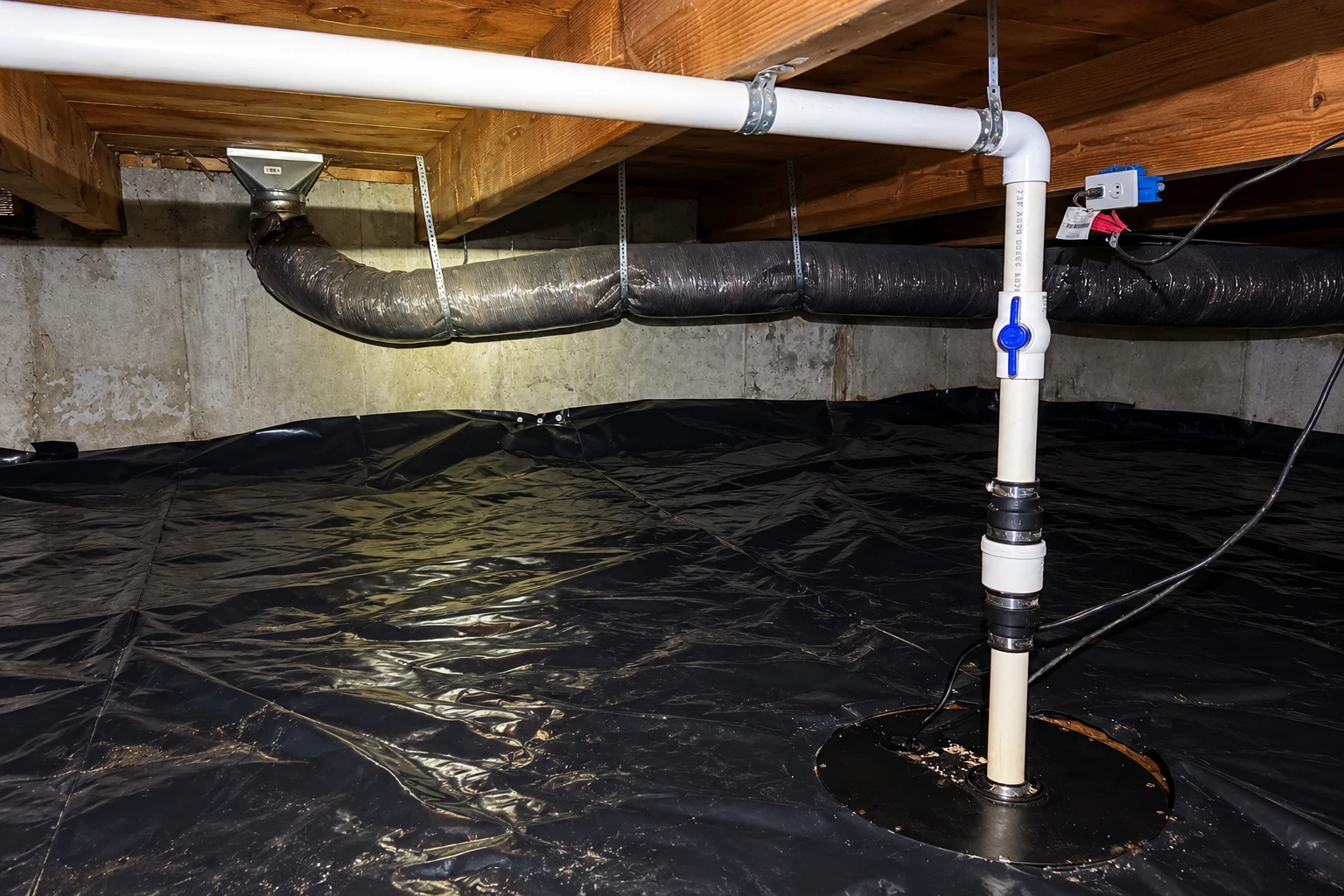
I start with the water, because if there's standing water, we find where it's coming from before any plastic goes down. I also note what lives in the crawl space, like ductwork, a furnace or a water heater, since that decides which plastic we use and whether a full seal is worth talking about. Once any repairs are done, our crew clears out stored items and debris so the cover reaches all of the ground, then lays the plastic over every bit of soil with the seams overlapped and taped, keeping it out of the way of how water already drains under your house.
The crawl space is the bottom end of the air moving through your home. When dampness shows up in walls or a basement too, our vapor barrier installation handles those areas, and attic air sealing closes the gaps up top that pull air from under the floors.
Plain ground cover
Plastic over all the soil, with the vents left as they are. It suits a crawl space that stays fairly dry once the ground is covered and has no ductwork running through it.
Fully sealed crawl space
Sealed vents, a liner sealed at the edges and a way to dry the air, which makes it a bigger job. If your ducts or furnace sit down there, or the space stays damp after a cover, this is usually the one I'd lean toward.
Heavier plastic near equipment
Thicker, reinforced plastic holds up better, and thinner sheeting needs protection along the paths a technician takes to reach equipment for service. If you have a furnace, water heater or pump down there, ask for the sturdier material or added protection along those paths.
Repairing an existing cover
If the plastic you have is mostly sound, it can be repaired instead of replaced. We patch the tears and close the gaps so the ground is fully covered again.
Get a written plan for your crawl space
Send the form and we reply within one business day to set up a free estimate at your property, with no pressure and no obligation. You can also call (573) 289-3994.
Call (573) 289-3994Why Columbia homeowners call Heatwise about their crawl space
I write the estimate myself
I come out myself to look, measure and write the estimate, our install crew does the work, and I check it with you at the end. The person who told you what goes where is the one who looks it over.
In business since 2023
I started this business in 2023 after years of selling insulation jobs I couldn't explain from start to finish, so I learned the install side under seasoned installers. That's why every estimate spells out where each material goes and why.
Licensed and insured contractor
We're licensed and insured. That matters under your house, where our crew works around your pipes, wiring and furnace.
Based in Columbia, working nearby
We're based in Columbia and work across the area, including Jefferson City, Fulton, Moberly, Boonville and the cities around them. We see a lot of older houses with low, damp crawl spaces, so we know what to look for when we go down.
On this job the water question gets settled before anything else, so ask me to come take a look.
What happens after you call about your crawl space?
Call or send a message
Call, email or use the form, and we get back to you to set a time for me to come out. We answer from 6 AM to 11 PM, seven days a week.
I measure and take photos
I go down into the crawl space, measure it, photograph it and note anything that has to be fixed first, like a leaking pipe, low clearance or old plastic that's coming apart.
You get a written estimate
It lists the areas, the plastic and the steps we plan, with any water repair shown separately ahead of the liner, so you can see what each part costs. You decide from there.
Crew installs, I check it
Our crew does any sealing first and lays the cover second. Then I go over the finished job with you, with photos from inside so you can see where everything went.
Common questions
How much does a crawl space vapor barrier cost in Columbia, MO?
A crawl space vapor barrier in Columbia usually costs about $1,800 to $4,200 per job for material and installation, and that's the going range in the area, not a quote from us. Where your house lands depends mostly on the square footage and how thick the plastic is. Homes in East Campus and North Central with low clearance or fieldstone piers often get higher labor estimates, because crews move slower in tight spaces and sometimes shore up piers on the same visit.
What is the best way to choose between a vapor barrier and a sealed crawl space?
Start with a cover over all the ground, and consider a full seal when the space stays damp or your ducts and furnace live down there. In a field study in the humid Southeast, closed crawl spaces stayed much drier and used less heating and cooling energy over the year, but they had sealed vents, a sealed liner and a way to dry the air. The gain came from the whole system, not the plastic alone.
Should I close my crawl space vents after a vapor barrier goes in?
Not by just shutting them, because closing vents without the rest of a sealed crawl space can raise the moisture down there. It can also turn deadly if a fuel-burning furnace or water heater that draws its air naturally sits in the crawl space, so that equipment has to be looked at first. That's why closing vents belongs with a full seal, not on its own.
What should I do if my crawl space in Columbia has standing water?
Get the water out and find where it's coming from before any plastic goes down, or the moisture comes right back. It usually points to a leaking pipe or groundwater coming in, so that repair goes into the plan and the budget ahead of the liner. Around Columbia, much of the ground is loess, a fine wind-blown soil, over limestone with hidden cracks that groundwater can travel through, so a crawl space can stay wet even when the yard slopes away the way it should.
Does a crawl space vapor barrier help with radon in Missouri?
A ground cover helps keep soil gases from coming up into the house, but only a radon test tells you where your house stands. The state health department says radon can seep through gaps and cracks in a foundation and build up inside, and the EPA recommends testing every home no matter what zone it's in. The Missouri Department of Health and Senior Services radon program will send you a free test kit if you ask.
How do I get my crawl space ready for a vapor barrier?
Clear out stored boxes, old lumber and other debris you can reach, so the cover can go over all of the ground, and our crew clears whatever's left. If you have plumbing or heating work planned down there, it's easier to get it done first, so nobody has to crawl over new plastic.
Have your crawl space looked at
Call (573) 289-3994, email team@columbiainsulationcompany.com or use the form, and tell us the crawl space's rough size, any standing water, what equipment is down there and any radon result, so I come out with the right questions.